Turning R&D into reality to meet the challenges of the modern battlefield
Knowing when to build on commercial systems and when to develop something new can be the difference between parity and information dominance.
Under Secretary for Research & Engineering Emil Michael pruned a sprawling list of “critical technology areas” down from 14 to just six: AI, quantum, biomanufacturing, contested logistics, directed energy (lasers, microwave weapons, et al), and hypersonics. His aim: “deliver capabilities” in three years or less.
Abigail Robbins and Malcolm Warbrick of The Science Coalition argue that the Pentagon is making a mistake in putting new limits on university-based defense research.
Of 10 advanced sensor tech areas, China leads in seven and the US in three, according to the Australian Strategic Policy Institute.
Govini's Billy Fabian said that for some JADC2 problems, the DoD has a "closing window... before the next generation of capabilities are too far along in development. Otherwise, it risks making its interoperability challenges even worse."
"This is a strong start," Sen. Sasse said of the 2,400-page, $250 billion legislation designed to bolster the US in its competition with China.
"Some do not believe this is an appropriate role for the government..." Republican Sen. Young said in an interview. "...[B]ut, simply, the private sector and venture capital community is not up to shouldering this task on its own."
“I don’t want to get into any specifics,” Mike White told me, “but some of the challenges we’ve had so far getting to flight have been, in certain instances, avoidable."
The most overlooked story of 2020, including by this publication, is that having a president largely divorced from making military decisions worked pretty well for the US military.
Army Contracting Command still accounts for 45 percent of all DoD Other Transaction Authority obligations, but the Air Force and, belatedly, the Navy are starting to catch up.
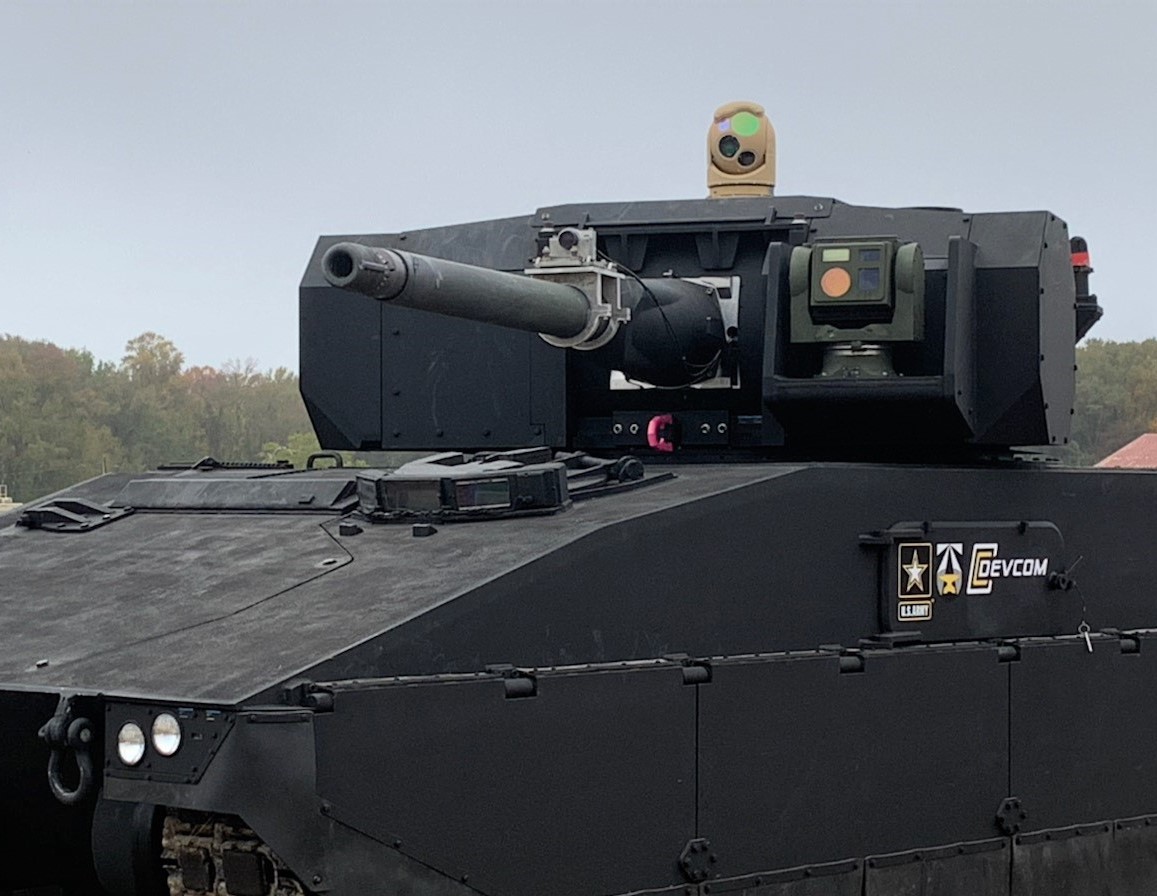
The Army will soon hold live-fire tests of an AI that can algorithmically spot targets and aim at them -- but a human still has to pull the trigger. Will ATLAS let future tanks fight better with smaller crews?
With ground tests this year and a full-up flight test in 2023, OpFires hopes to become the Army’s long-term solution for its Mid-Range Capability missile.
Other Transaction Authority prototyping tripled from 2017's $1.6 billion, while other non-traditional vehicles, like research grants, declined from $730 million to $590 million.